
Voter Responsiveness in Philippine Local Governments: The Electoral Effects of Fiscal Behavior on Incumbent Reelection
Published: 2026-06-15 • Methodology: Longitudinal OLS Regression Models
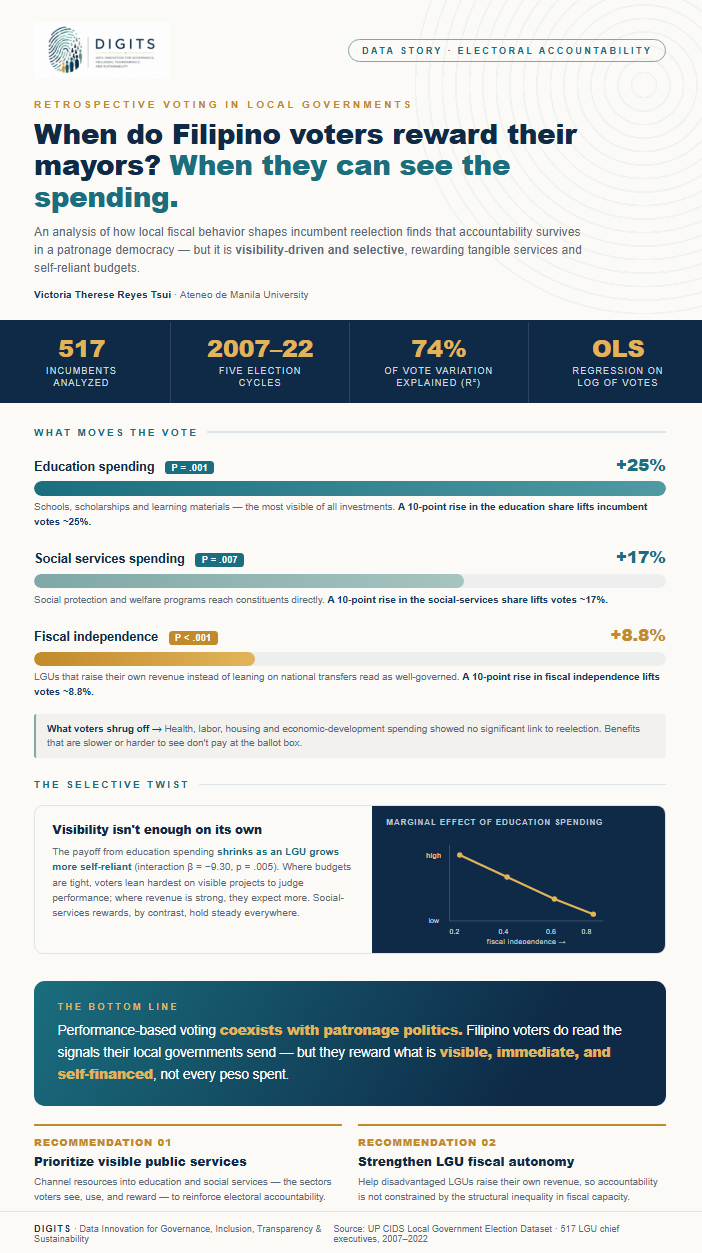
Figure 1.1: description
This study, "Voter Responsiveness in Philippine Local Governments: The Electoral Effects of Fiscal Behavior on Incumbent Reelection" by Victoria Therese Reyes Tsui, is one of four papers in UP CIDS Monograph Series 2026-01, Unpacking Local Governance in the Philippines: Patterns, Persistence and Performance, edited by Dr. Rogelio Alicor L. Panao and published by the University of the Philippines Center for Integrative and Development Studies through its Program on Social and Political Change. Like the other studies in the volume, it draws on the Philippine Local Government Interactive Dataset — a resource compiled over two years covering electoral, fiscal, and governance records from 1992 to 2022. This resource is now being expanded by PhilDIGITS.
This research examines 517 incumbents from 2007 to 2022, Tsui finds that retrospective voting does operate in the country's patronage-dominated democracy, but selectively: voters reward visible, tangible spending on education and social services, along with fiscal independence, while overlooking less visible expenditures. The paper contributes to the monograph's broader inquiry into how accountability, fiscal autonomy, and electoral incentives shape local governance in practice.
Download the data story.
Download the monograph.